
Discover the creative possibilities of cyanotype in a hands-on workshop in Hackney, East London. Suitable for beginners, artists, and photographers alike, you’ll learn one of photography’s most iconic alternative processes using hand-coated papers, digital negatives, UV exposure, and contemporary toning techniques.
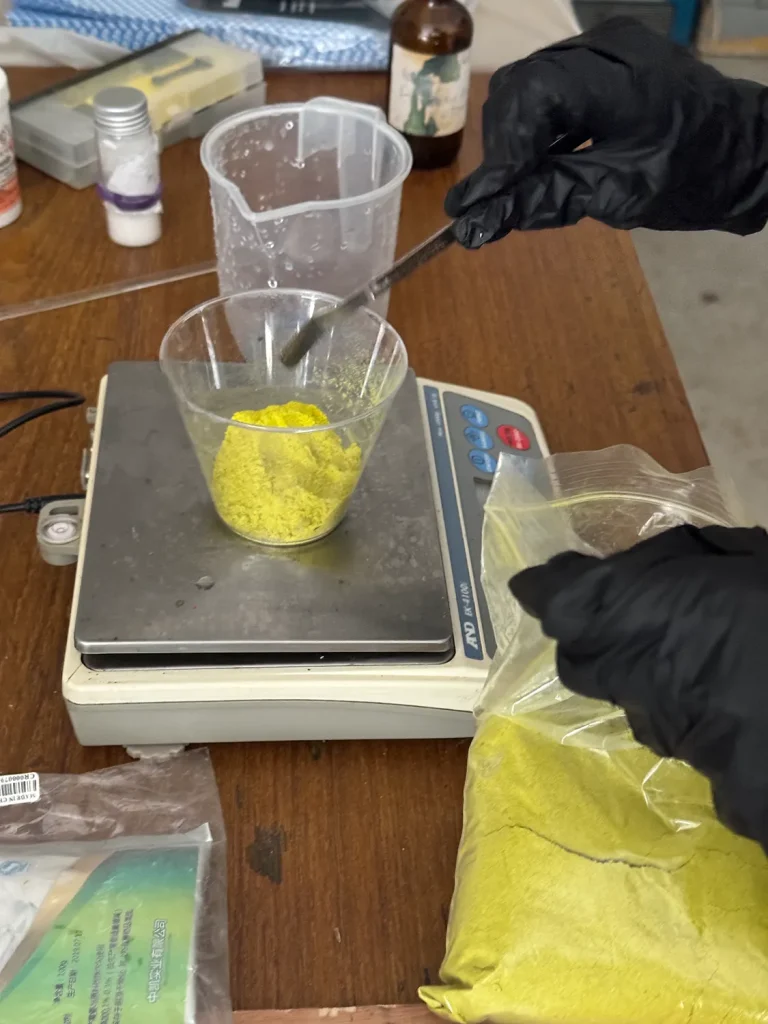
• Mixing and coating cyanotype chemistry by hand
• Creating prints using sunlight and UV exposure units
• Working with digital negatives for photographic detail and control
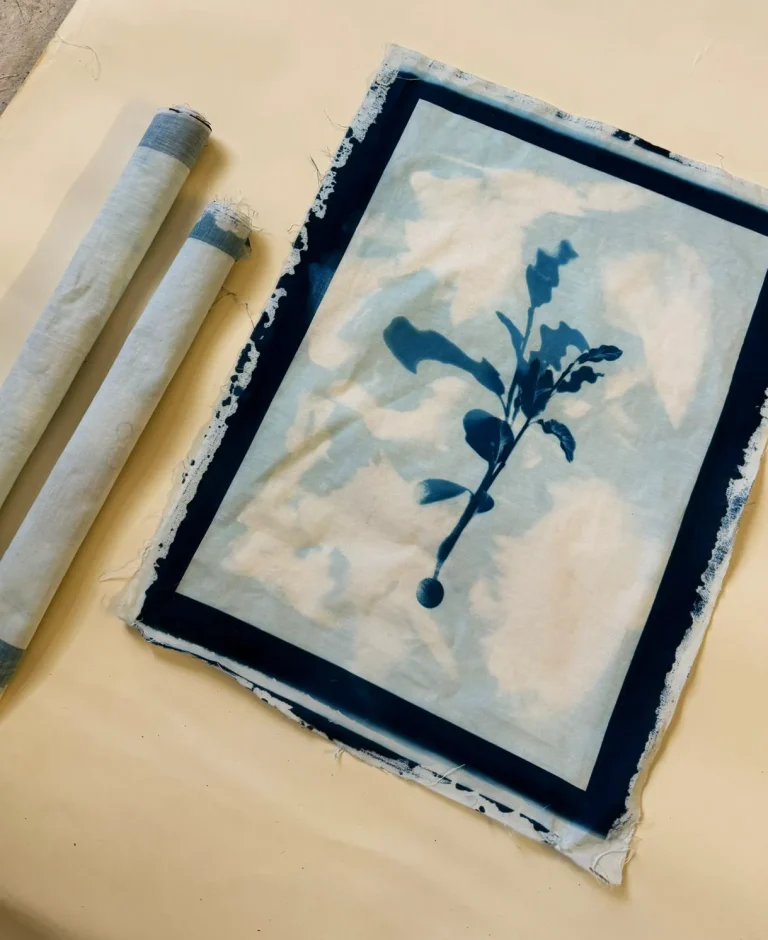
• Exploring different papers, fabrics, and alternative surfaces
• Bleaching and toning techniques using tea, coffee, tannins, and other natural materials
• Layering, masking, collage, and mixed-media approaches
Cyanotype is one of photography’s oldest and most accessible alternative processes. Known for its distinctive Prussian blue colour, it combines photography, printmaking, and experimentation in a uniquely tactile way.
While rooted in 19th-century photographic history, cyanotype remains a highly contemporary medium used by photographers, artists, and mixed-media practitioners around the world.
This workshop is designed to give you the confidence and practical knowledge to continue working independently. The focus is on understanding the process, experimenting freely, and discovering how cyanotype can become part of your own creative practice.
• Fine-art photographers and mixed-media artists
• Photographers interested in alternative and historical processes
• Artists exploring printmaking and image-based work
• Complete beginners looking for a hands-on introduction
No prior darkroom experience is required.
Format & Duration
• Flexible duration: 1–3 full days (mid-week or weekend)
• Format: One-to-one tuition or small-group workshops
• Location: Hackney, East London
• Online option: Available with multi-camera demonstrations
With over 35 years of photographic practice, Ian combines traditional alternative-process techniques with contemporary digital workflows. He teaches BA and MA photography at London Metropolitan University and Cambridge School of Art and has helped photographers, artists, and students develop their work through workshops, mentoring, and university teaching.
His work has been featured in international exhibitions and publications including Studies in Photography and AlternativePhotography.com.
• One-to-One: £450 per day
• Small Groups: £290 per participant per day
• Deposit: £100 per participant to secure your place
How long does a cyanotype workshop last?
Most workshops run for one full day, although two and three-day sessions are available for advanced techniques, toning, and project-based work.
Do I need a camera?
No. Cyanotype is a contact printing process. You can work with provided negatives and materials or bring your own digital files.
Will I learn toning techniques?
Yes. Alongside classic blue cyanotypes, you’ll explore bleaching and toning methods that can produce warm browns, sepias, greys, and near-black prints.
Can I use my own images?
Absolutely. If you’d like to create digital negatives from your own photographs, guidance is included as part of the workshop.
Spaces are limited to keep workshops focused and hands-on.
Email: ian@ianphillipsmclaren.com
“Just so you know, today’s workshop was outstanding, we all really enjoyed it. Thank you for this opportunity.”
— Marek Poradowski, Photography Student, London Metropolitan University
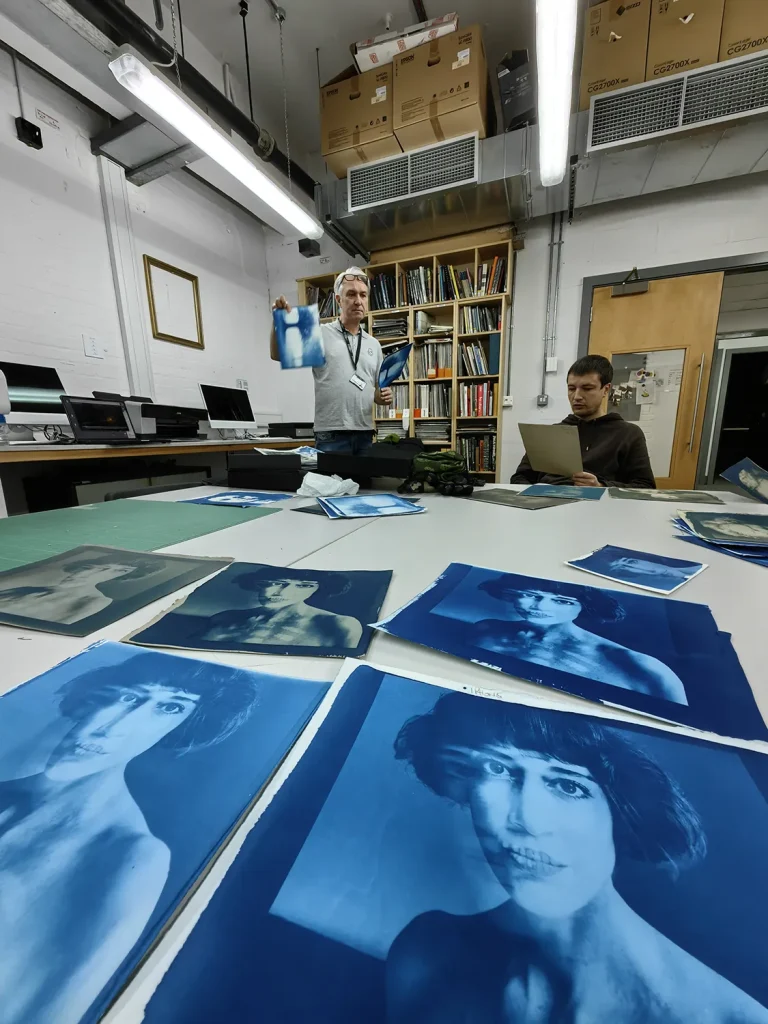
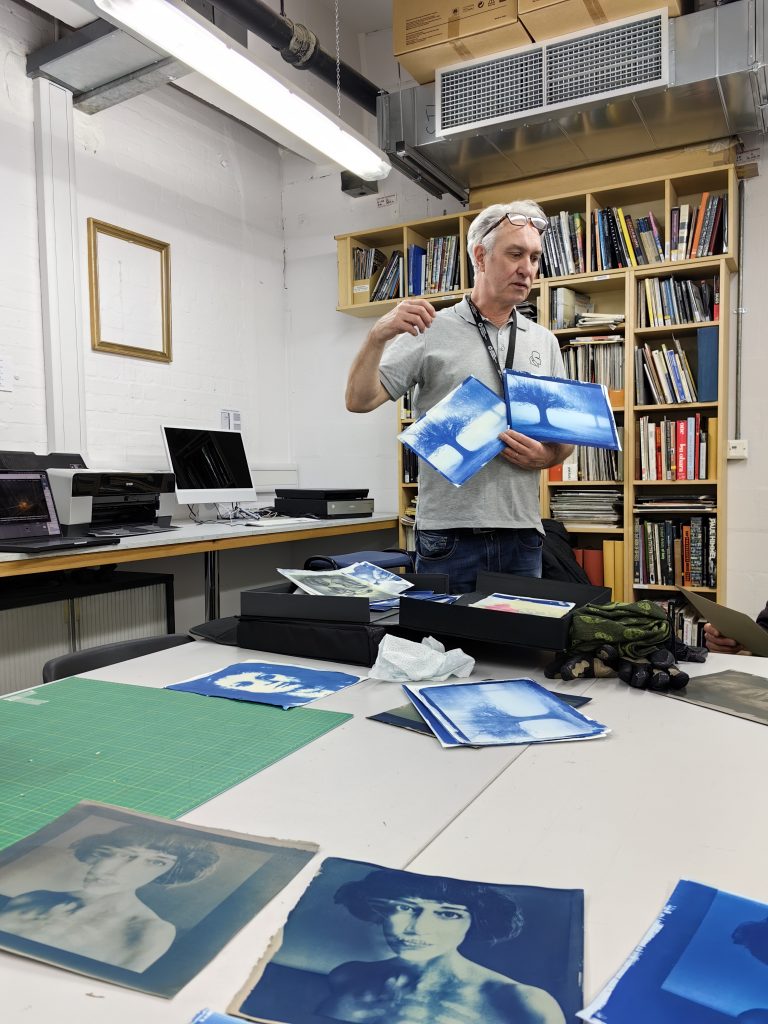
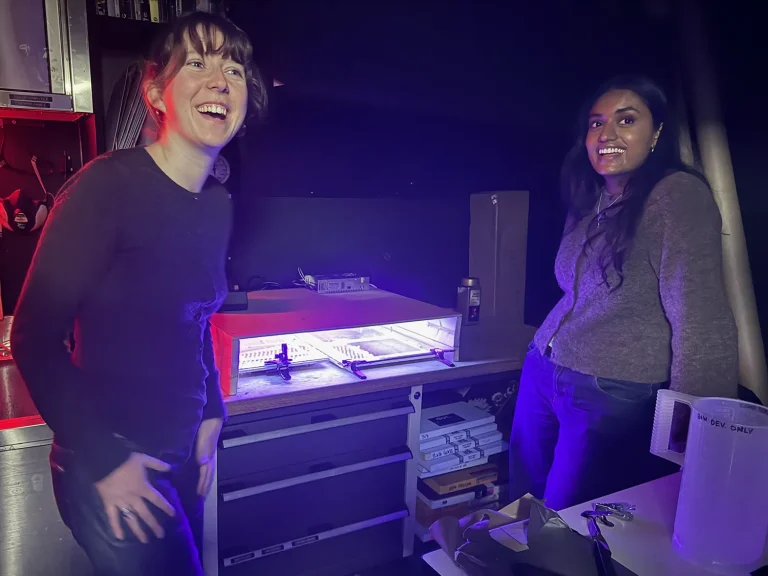
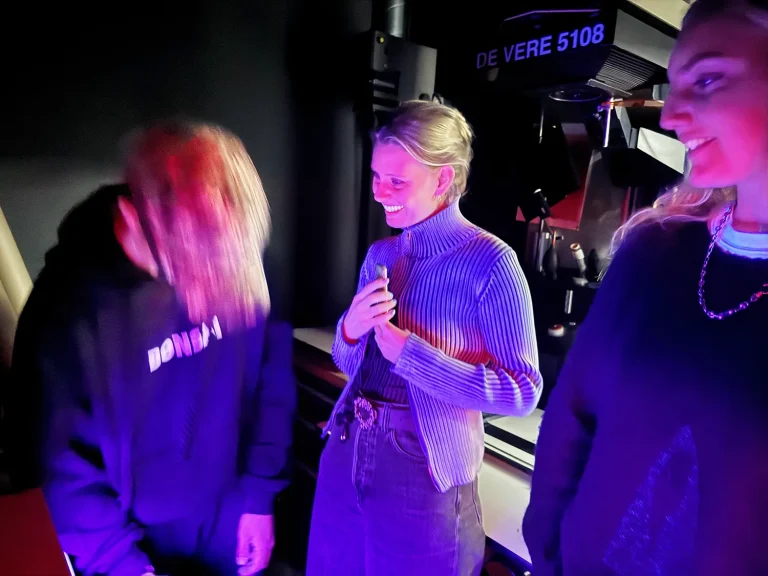
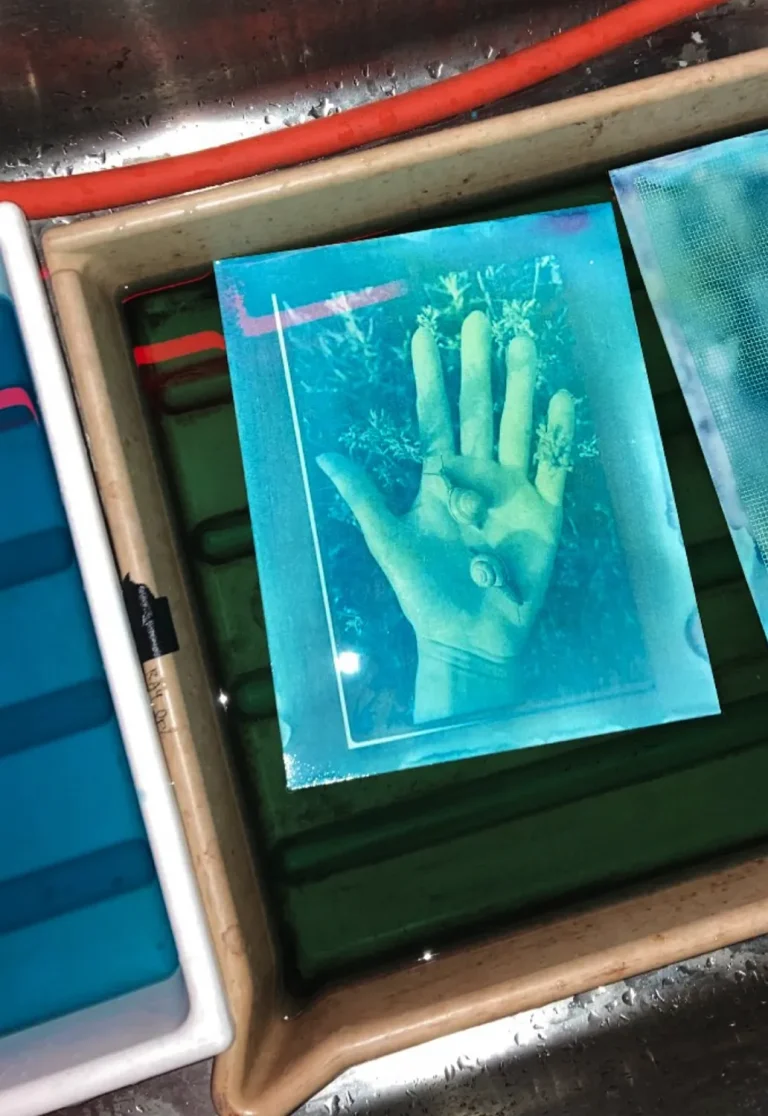
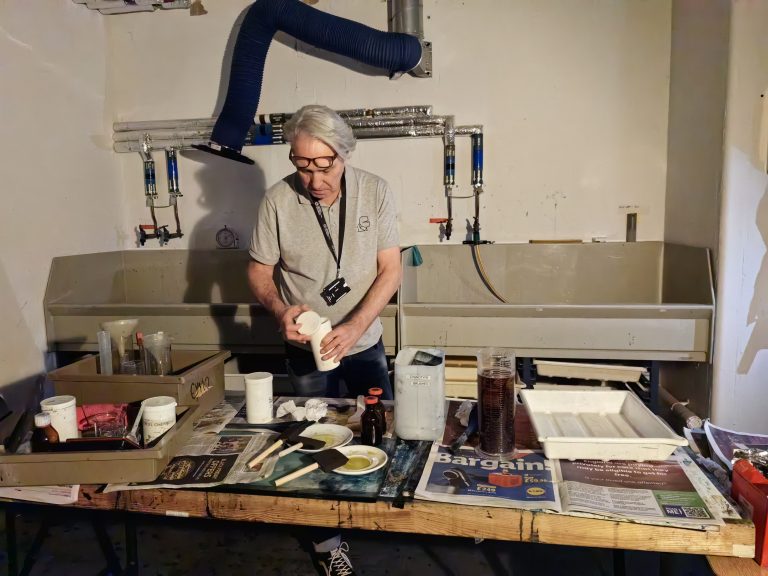
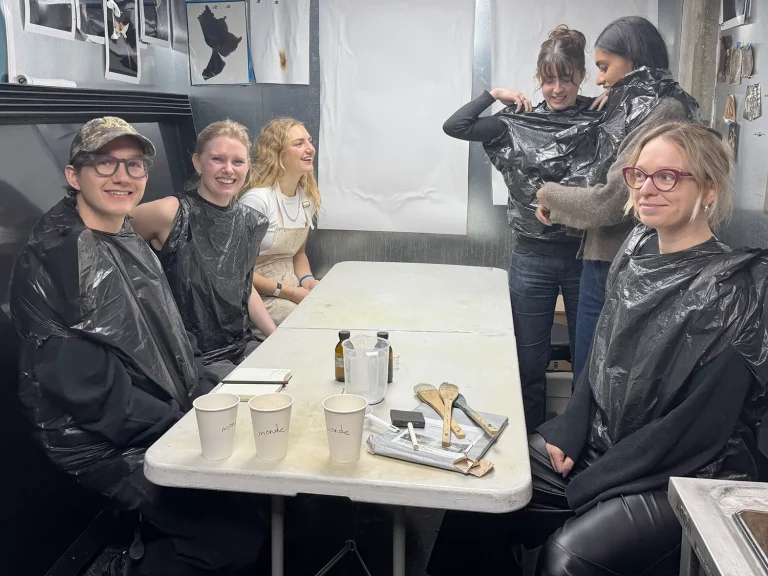
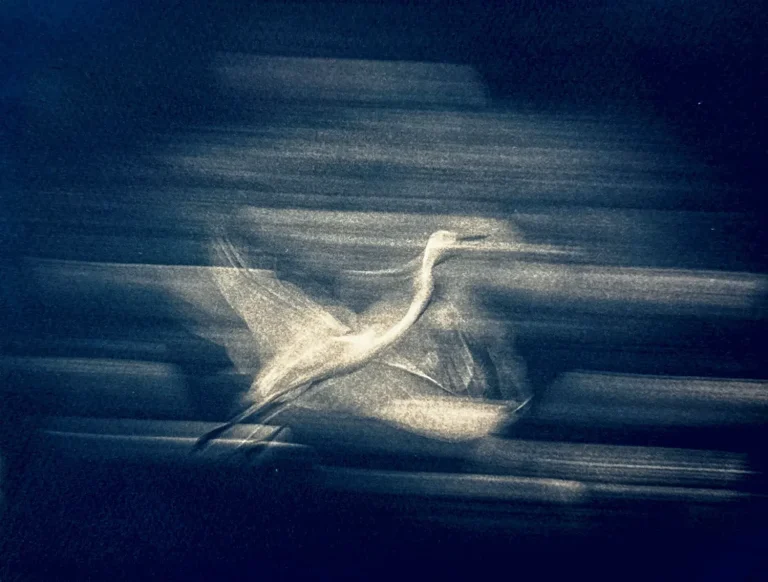
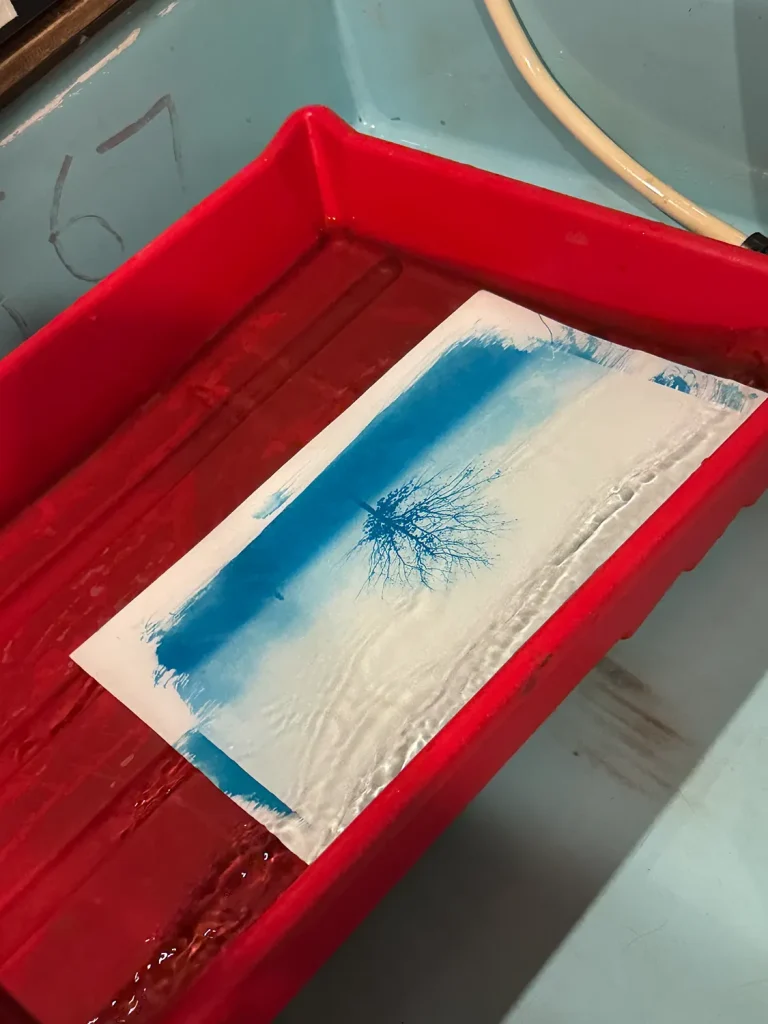
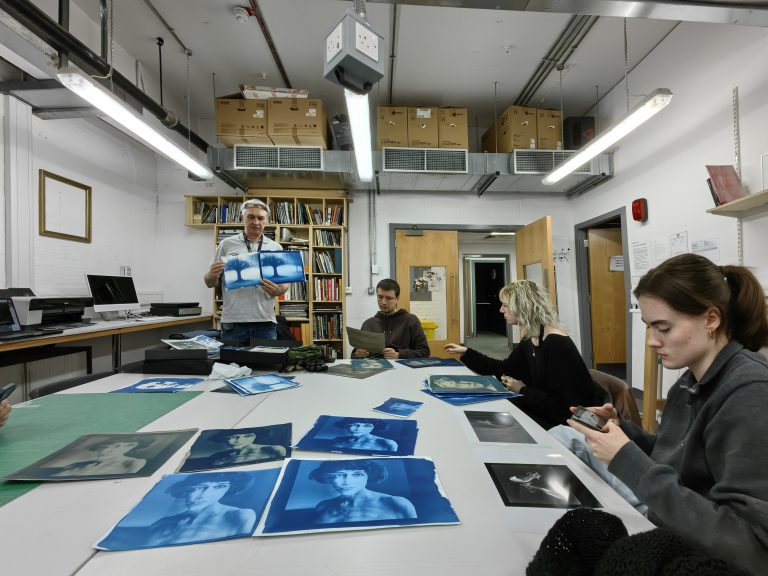
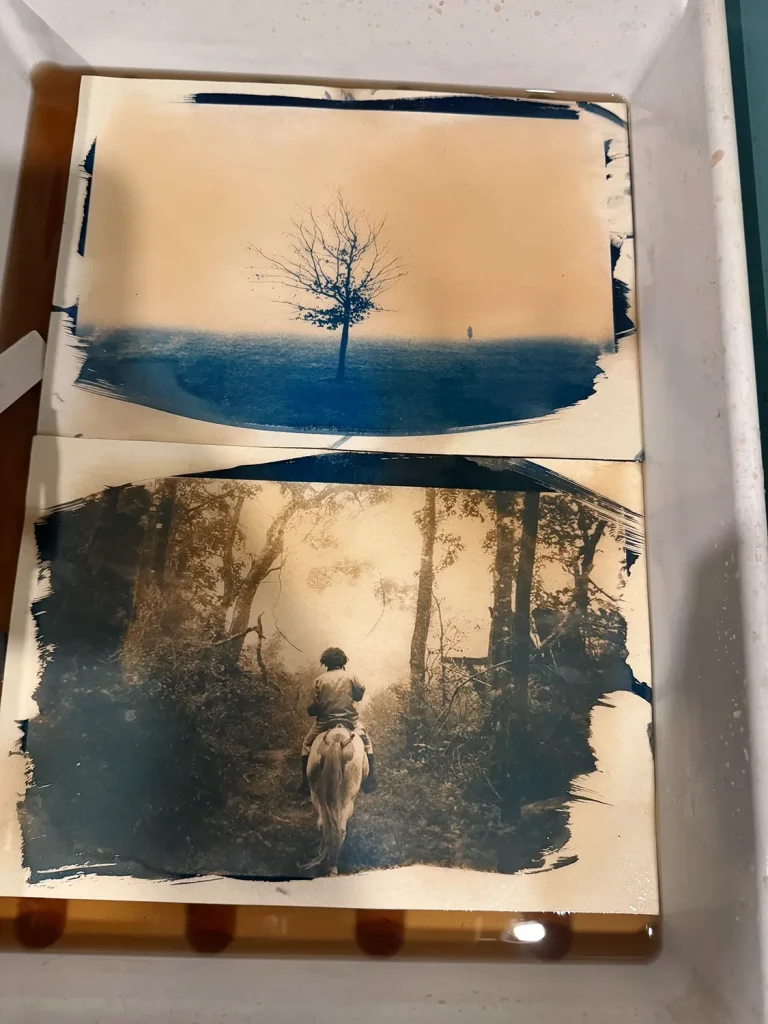
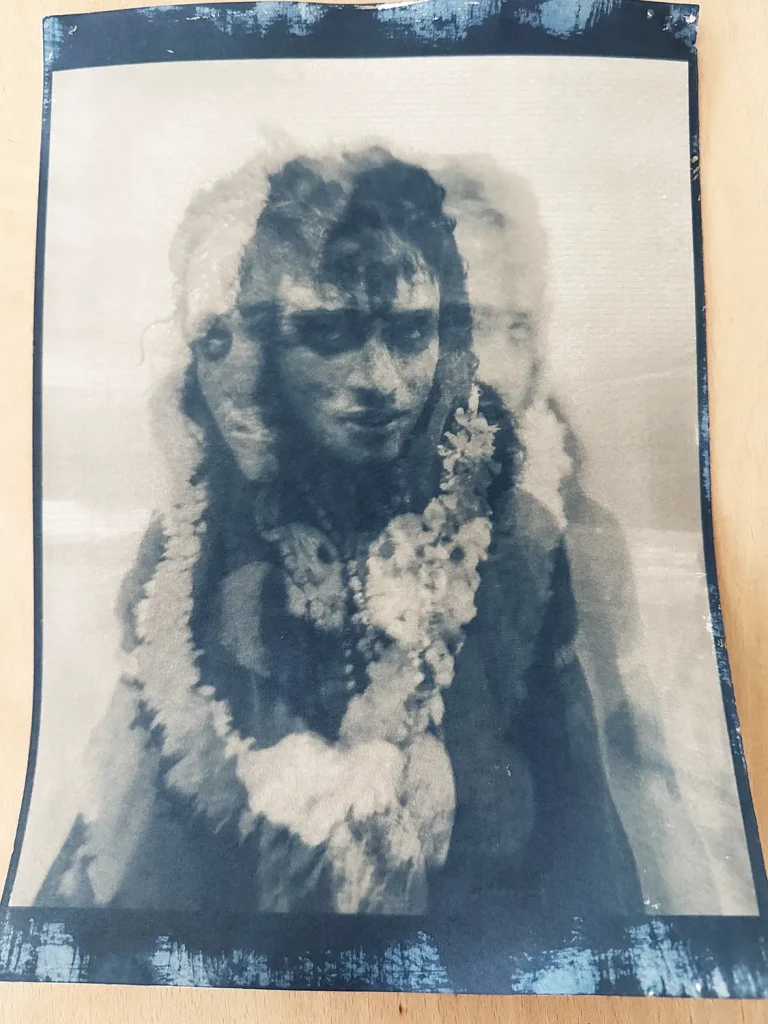
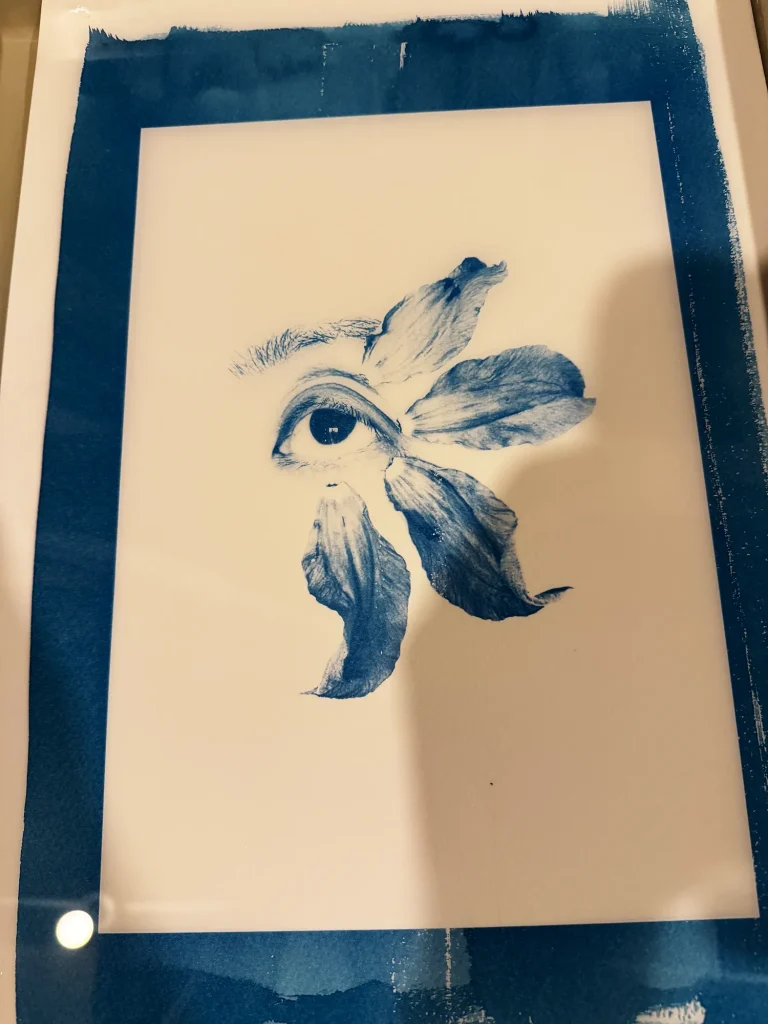
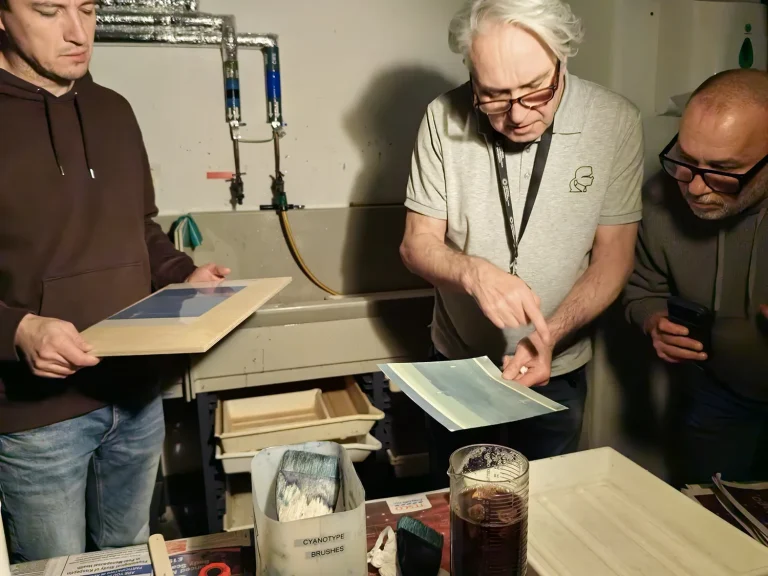
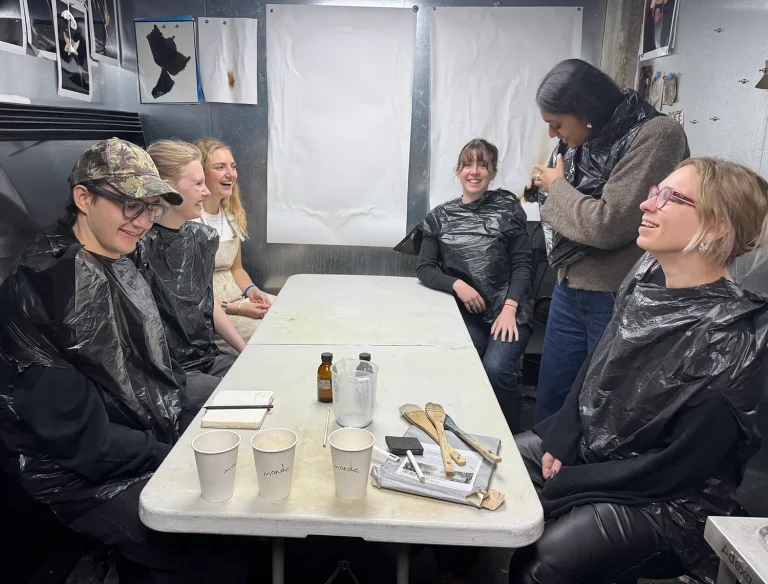
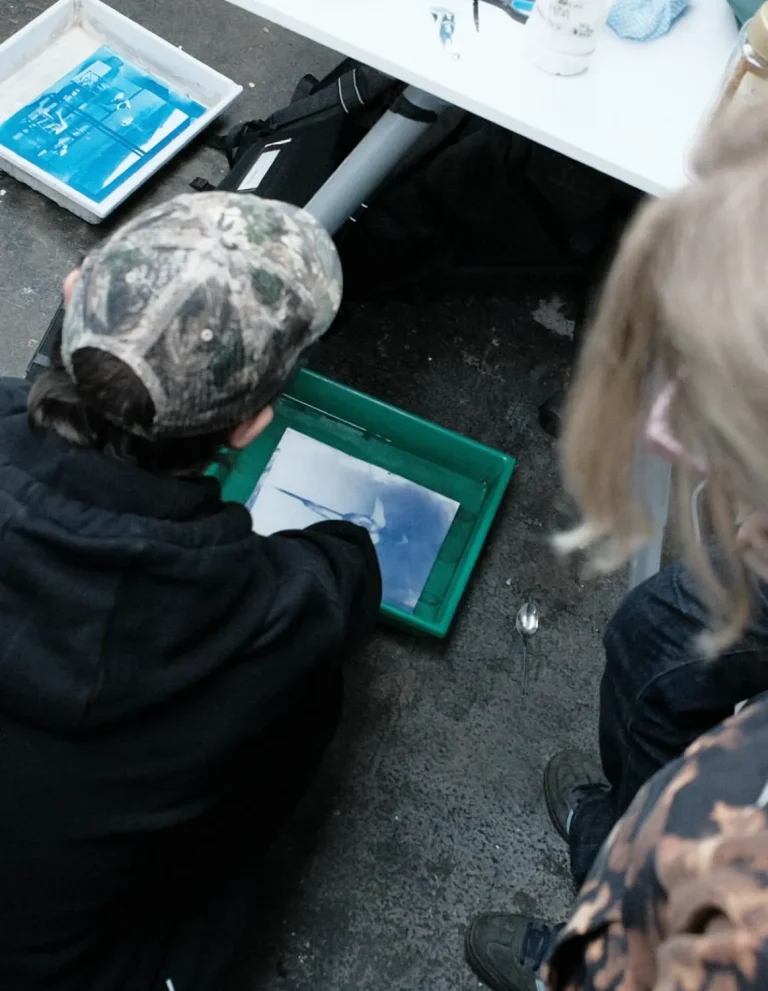
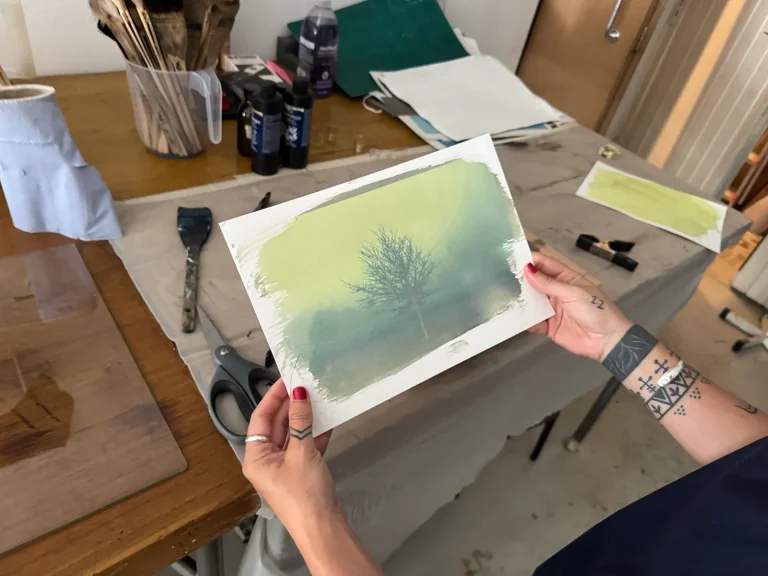
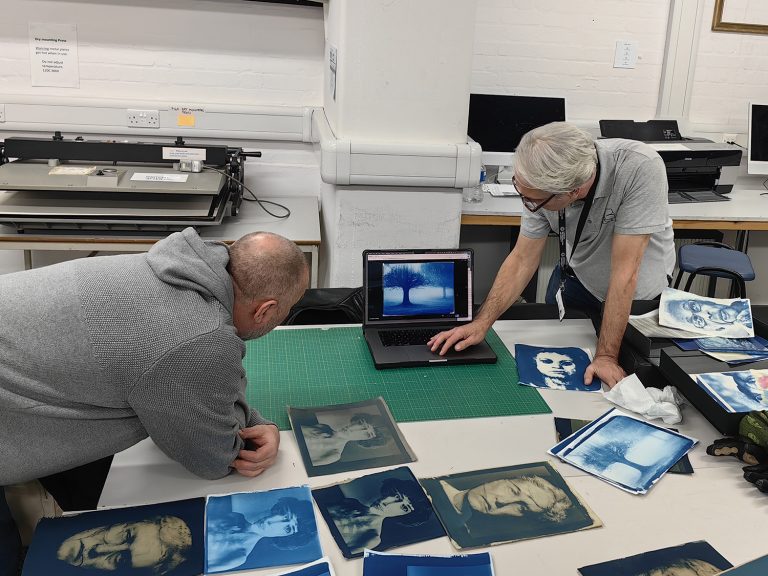
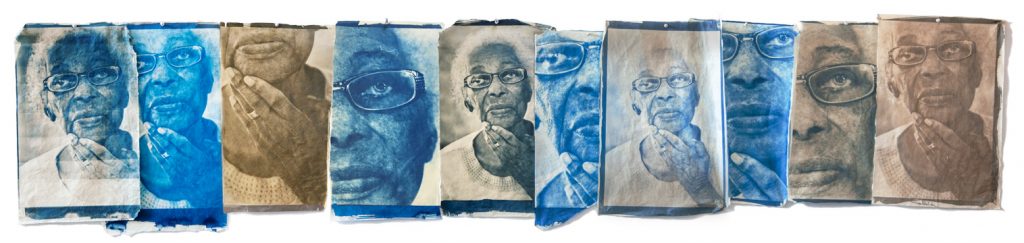
The images below were created during recent cyanotype workshops and mentoring sessions. They offer a glimpse into the practical, experimental nature of the process — from coating and exposure through to washing, toning, conversation, and creative discovery.




Workshop Location
These cyanotype workshops take place at my East London studio in Hackney, just a 4 minute walk from Hoxton station.
Online sessions are also available for those outside London, using a multi-camera Zoom setup for live demonstration and feedback.
👉 Also available: Salt Printing Workshops in London and Gum Bichromate Tuition
This cyanotype workshop is also offered as a course, class, or one-to-one tuition — ideal for those looking to explore traditional or toned cyanotypes in depth.